Nothing on a Plane Is an Accident
30 Mysteries That Teach You to Read Any Aircraft Like an Engineer
Why does the 747 have a hump? Why are plane windows never square? Why is the “black box” bright orange? Every strange shape on a plane is the answer to a problem. This book turns 30 of them into detective cases: you make a guess, check the evidence and find the real reason, with the science explained in plain words. By the end, you can look at any aircraft, even one you have never seen, and work out why it looks the way it does.
The book goes on sale here soon. The 3D viewer is open now.
230 pages · full color · reads on phone, tablet and computer
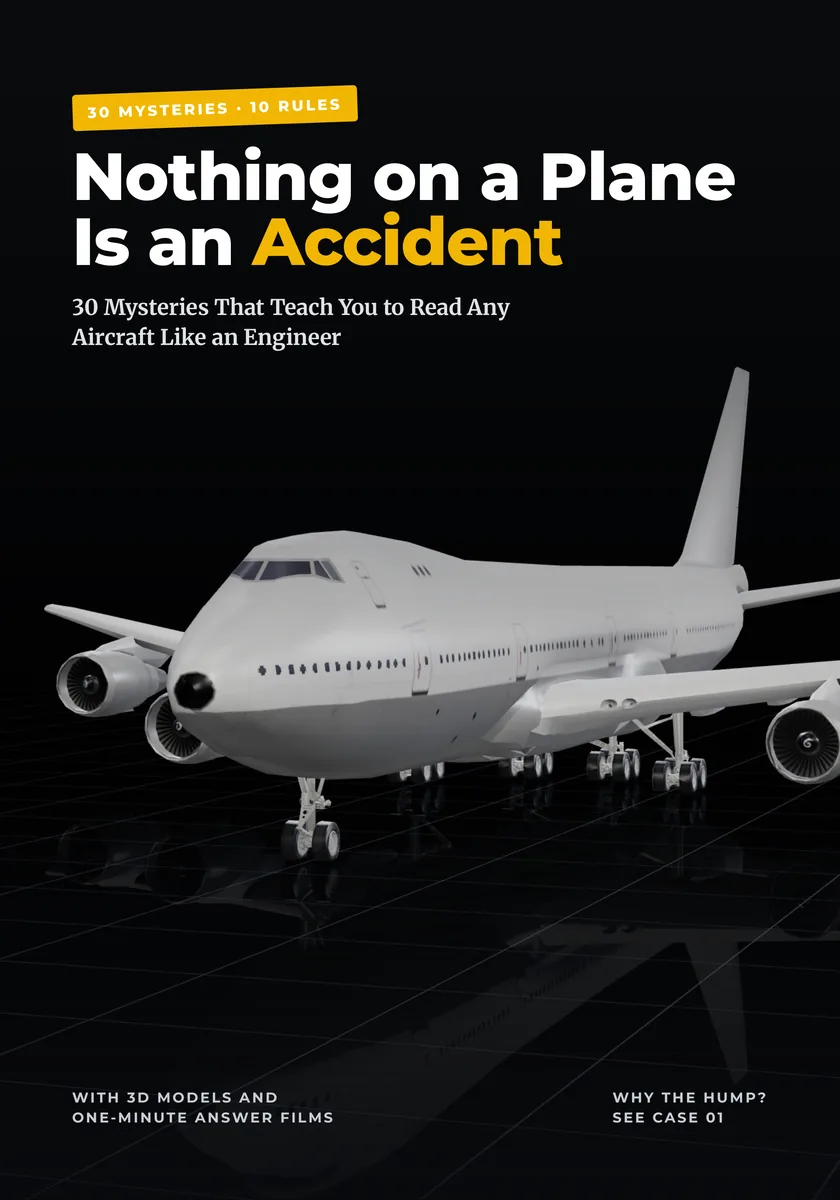
Every plane is full of clues
Next time you’re at an airport, look at the planes. Some have a bump on top. Some have wingtips that curl up. Their windows all have round corners. A few have their engines on the tail instead of under the wings.
Most people never wonder why. They think it’s just how planes look. It isn’t. Every one of those shapes is the answer to a problem. Somebody had a problem, thought hard, and paid a price to fix it. The shape you see is what’s left behind, like a footprint. This book teaches you to read those footprints.
Every word is explained the first time it’s used, and every case builds on the ones before it. Read the cases in any order, or go from 1 to 30 and watch the 10 rules click into place one by one.
Who it’s for
Curious teens
Written so a curious 15-year-old understands every word. Short pages, real stories, and a quiz at the end of every case.
Parents and grandparents
For the kid who loves planes or always asks “why?”: real science on real machines, and a mission to try at the airport.
Anyone who flies
For everyone who has looked out of the window and wondered why the wings bend up, or why the shades go up for landing.
Teachers and home schoolers
Each case is a short lesson with a quiz, a mission and its sources listed. Want to use it with a class? Write to us.
What the cases do for you
Every case in the book opens with the same three short answers. Here they are for the whole book.
The problem we’re solving
School teaches the science. Planes show it working. But nobody shows you how to connect the two, so the shapes stay a mystery and the science stays in the classroom.
Why this helps you
Engineers don’t memorize shapes. They ask what each shape pays for. Learn that one question and you start seeing reasons everywhere: the bump on the back of your phone, the shape of a car, the plane outside your window. It’s how designers think. After this book, it’s how you’ll think too.
After this book, you’ll be able to
- look at any aircraft, even one you’ve never seen, and work out why it is shaped the way it is
- explain 30 real mysteries in one sentence each, from the 747’s hump to the tiny hole in your window
- use 10 simple rules that explain almost every shape on almost every aircraft
- knock down a wrong guess with evidence, the way a detective does
- see school science at work: how air pushes, how metal stretches, how eyes see in the dark
- use the same thinking on cars, phones and buildings
10 rules explain almost every plane
You meet them one by one in the cases. When you see a strange plane, run through the list: one of them is usually behind it.
- Rule 1: Nothing is free.
Every shape on a plane is paid for with something. Find the price, and you find the reason.
- Rule 2: The pilot must see.
If the pilots can’t see what they need to see, the plane gets changed until they can.
- Rule 3: Air pushes back.
Air feels thin, but at airliner speeds it shoves hard. Planes are shaped to use that shove, or dodge it.
- Rule 4: Weight is the enemy.
Every extra pound costs fuel on every flight, forever. Designers fight for every one.
- Rule 5: Heat changes metal.
Hot metal stretches, softens and weakens. Speed and sun both make heat, and planes are built around it.
- Rule 6: Laws shape planes.
Some parts are there because a rule says so, and every rule has a story behind it.
- Rule 7: Airports shape planes.
A plane has to fit the places it lands: the runway, the gate, the ground under its wheels.
- Rule 8: Every crash teaches a lesson.
Many things that keep you safe today are there because something once went wrong.
- Rule 9: Easy to fix wins.
The simplest answer that works beats the clever one that might break.
- Rule 10: People on the ground matter.
A plane is not only for the people inside it. Noise and danger below shape it too.
Ask it about every strange shape you see. Then ask the second question: what did it cost?
Every case is seven pages
Always in the same order, so you always know where you are.
- The case opener. The problem we’re solving, and what you’ll be able to do after it.
- The clue. Something strange you can see on a real aircraft, and the question it raises.
- The wrong guess. The answer most people give, why it sounds right, and the evidence that breaks it.
- The evidence. The real science, step by step, with pictures.
- Case solved. The answer, in one sentence you can tell anyone.
- Same clue, other suspects. Is it a one-off or a pattern? Other machines that solved the same problem the same way, and the rule it teaches.
- What we learned. A fun fact, a quick quiz, a mission to try at the airport, and your QR codes.
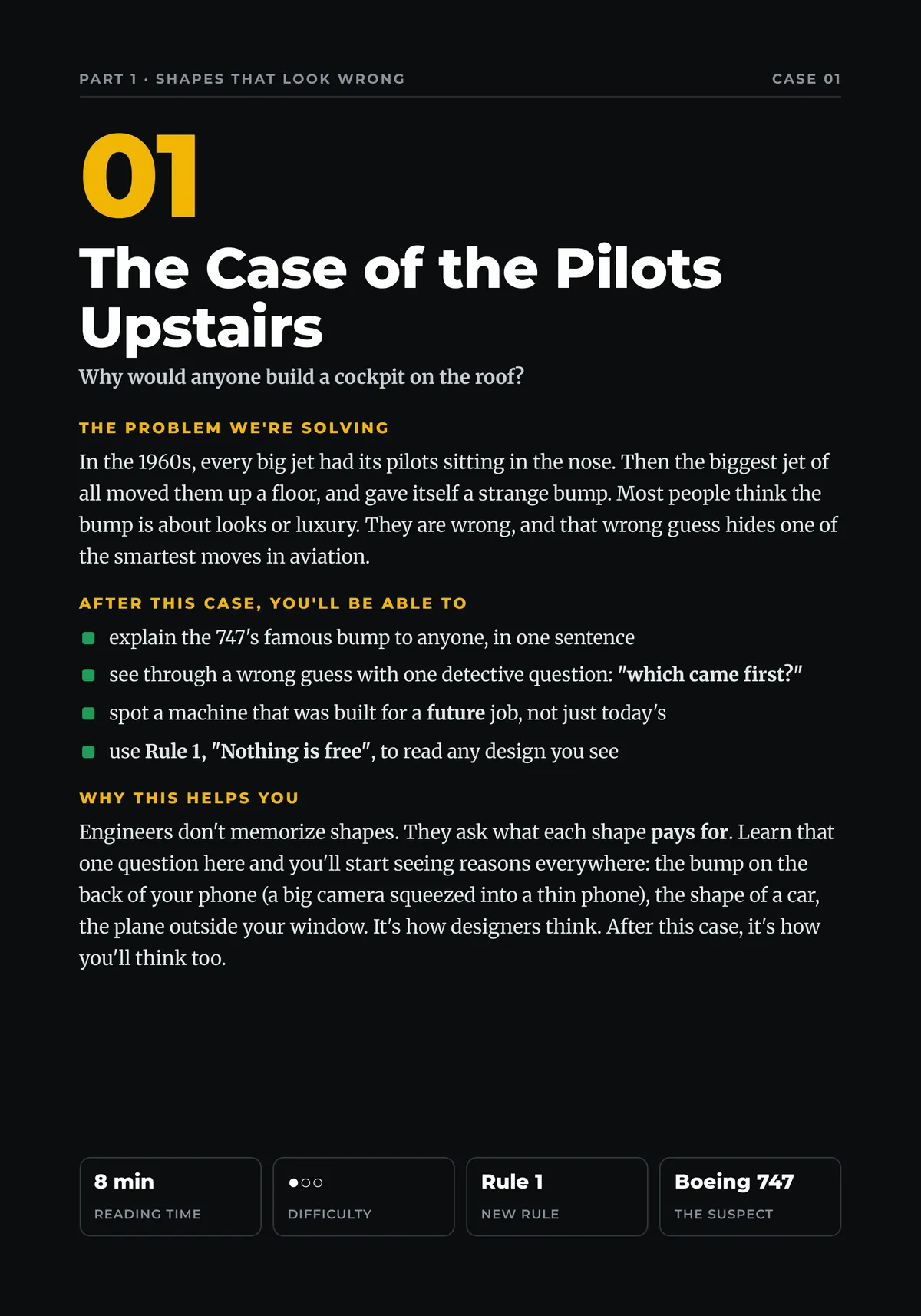
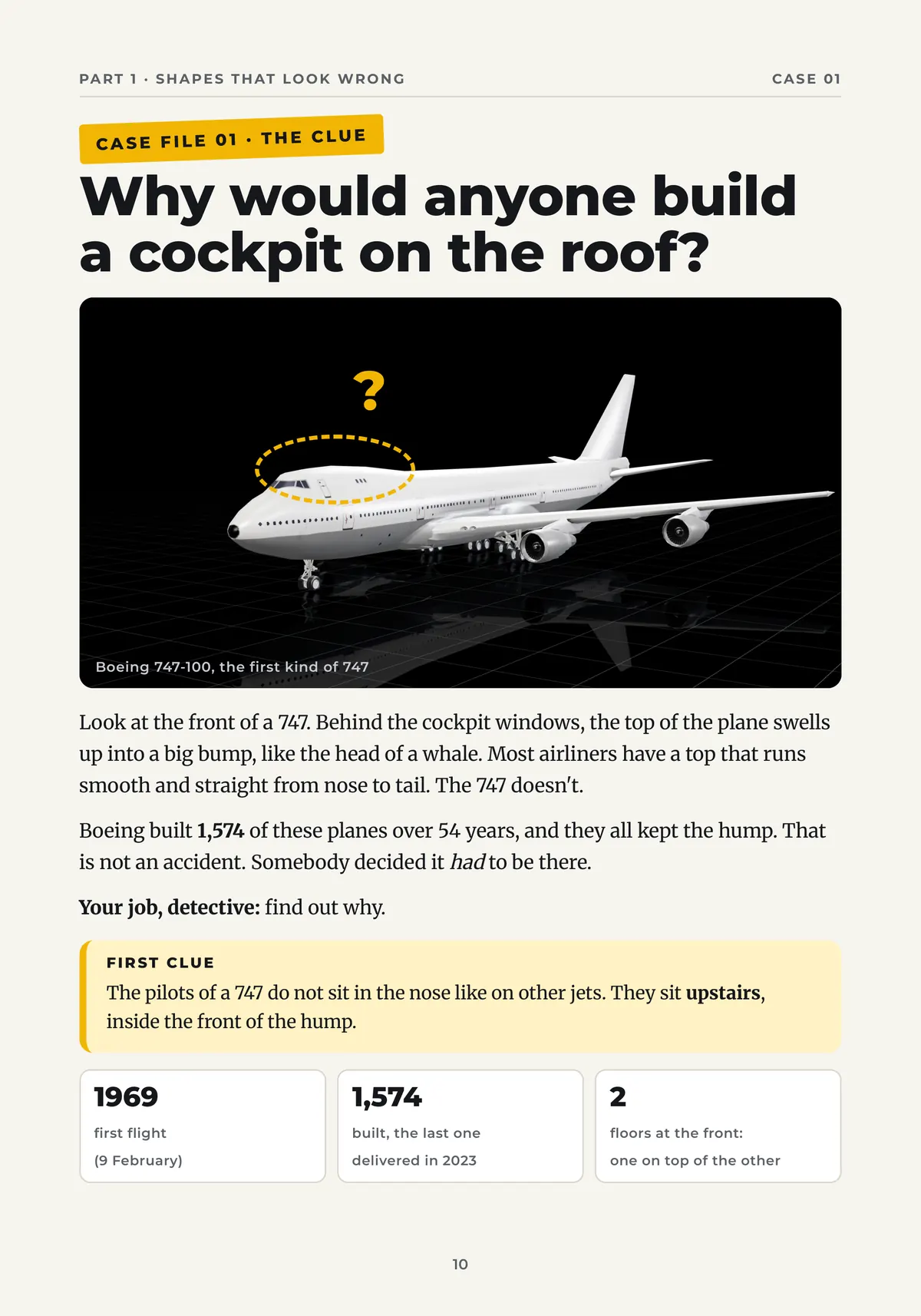
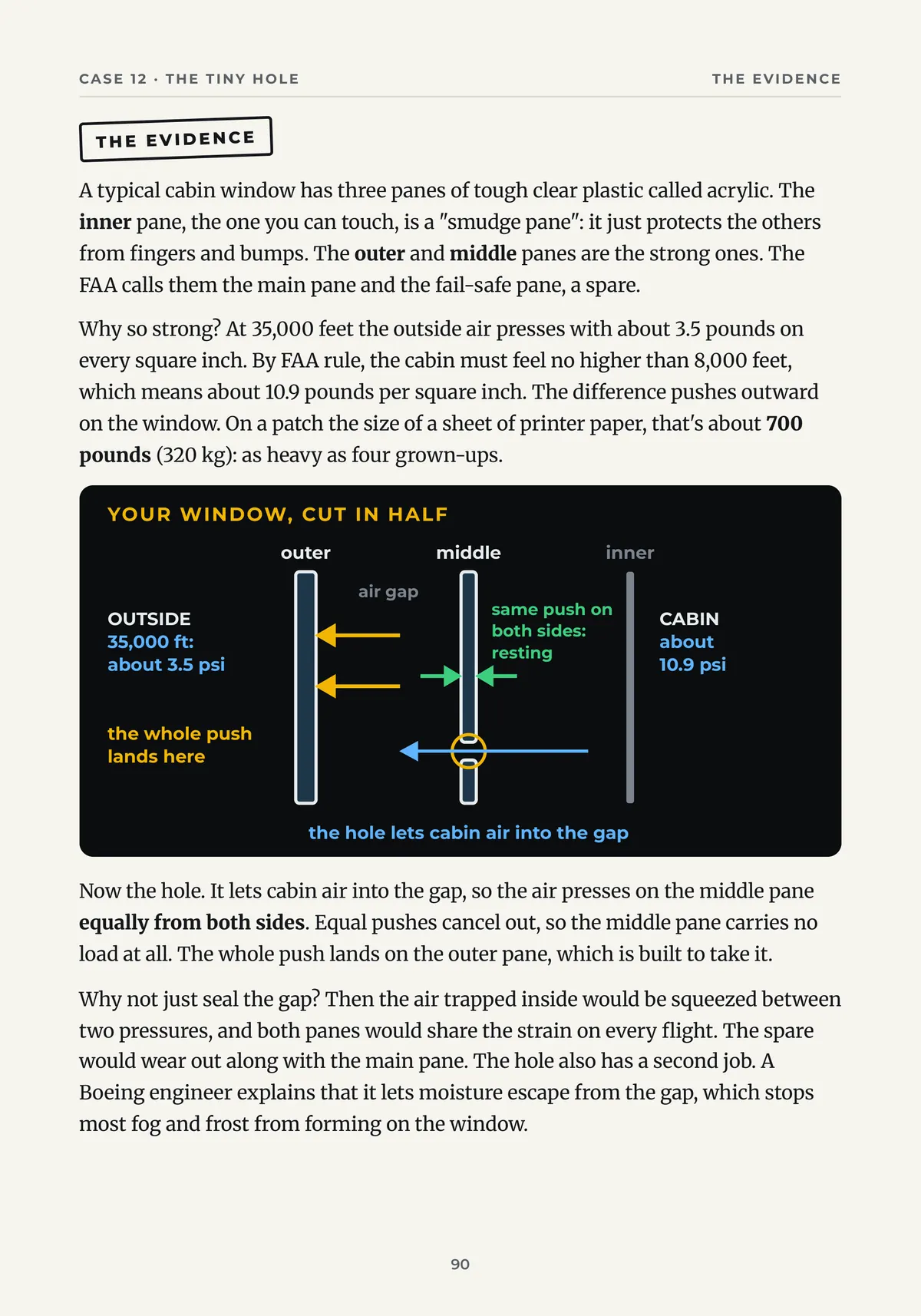
A look inside: three real pages
The 30 cases
Five parts, from shapes that look wrong to the colors that keep everyone safe. Each case is a real question you can ask about a real plane.
Part 1
Shapes that look wrong
Planes that look like a mistake, and the smart reason each one isn’t.
- 01The Case of the Pilots UpstairsWhy would anyone build a cockpit on the roof?
- 02The Case of the Bowing NoseWhy did the fastest airliner bend its own nose down?
- 03The Case of the Windowless NoseHow do you land a jet when you can’t see out of the front?
- 04The Case of the Periscope PilotWhy would anyone fly across an ocean without a front window?
- 05The Case of the Missing TailHow does a plane with no tail fly straight?
- 06The Case of the Flying WhaleWhy does this plane look like it swallowed another plane?
- 07The Case of the Engines on the RoofWhy would a warplane put its engines up high, out at the back?
Part 2
Parts you never notice
Small details you’ve seen a hundred times, each one there for a reason.
- 08The Case of the Round WindowsWhy are plane windows never square?
- 09The Case of the Bending WingsWhy do wings bend up in flight, and why is that good?
- 10The Case of the Curly WingtipsWhy do so many wingtips turn up at the end?
- 11The Case of the Hanging EnginesWhy do airliner engines hang under the wings?
- 12The Case of the Tiny HoleWhy is there a little hole in your window?
- 13The Case of the Tilted WingsWhy do wings tilt up a little, like a shallow V?
- 14The Case of the T on the TailWhy do some planes put their tail wing on top of the fin?
Part 3
Rules written by accidents and laws
Things on board that only make sense once you know the story.
- 15The Case of the Two-Engine OceanWhy do big jets now cross oceans on just two engines?
- 16The Case of the Open ShadesWhy do they ask you to open your window shade for landing?
- 17The Case of the Two DinnersWhy don’t the two pilots eat the same meal?
- 18The Case of the Ashtray Nobody UsesWhy does a no-smoking plane have ashtrays?
- 19The Case of the Dimming LightsWhy do the cabin lights go dim when you land at night?
- 20The Case of the Folding WingsWhy does a giant airliner fold up the tips of its wings?
Part 4
Speed and sound
How fast, how high, and which way: the big choices of every flight.
- 21The Case of the Vanished Supersonic JetsWhy don’t airliners fly faster than sound any more?
- 22The Case of the Leaky Spy PlaneWhy did the fastest jet ever leak fuel on the runway?
- 23The Case of the White Lines in the SkyWhat are the long white lines that jets draw across the sky?
- 24The Case of the 35,000-Foot HabitWhy do airliners fly so high?
- 25The Case of the Headwind TakeoffWhy do planes take off into the wind?
Part 5
Cockpits, calls and colors
The people at the front, the words they use, and the colors that keep everyone safe.
- 26The Case of the Empty Third SeatWhere did the third person in the cockpit go?
- 27The Case of the Joystick JetWhy do some airliner pilots steer with a joystick?
- 28The Case of the Strange Distress CallWhy do pilots in trouble shout “Mayday”?
- 29The Case of the White PlanesWhy are almost all airliners painted white?
- 30The Case of the Orange Black BoxWhy is the “black box” bright orange?
Ready to solve all 30 cases?
What you get
- 230pages, 7 x 10 inches, in full color
- 30cases, seven pages each
- 10rules that explain almost every plane
- 30one-minute answer films online, one for every case
- 3Da model to turn online for every case
- 0pictures made by AI
At the back of the book
A final exam with 10 mystery planes, an airport mission log where you tick off each case’s mission, and a certificate to print or fill in on screen.
Real pictures, plain planes
The 3D pictures come from our own studio, and the diagrams were drawn for this book. The photos are free-to-use pictures, most of them from U.S. government archives, each credited where it appears. The aircraft are painted plain white, so you see the shape without any airline’s colors.
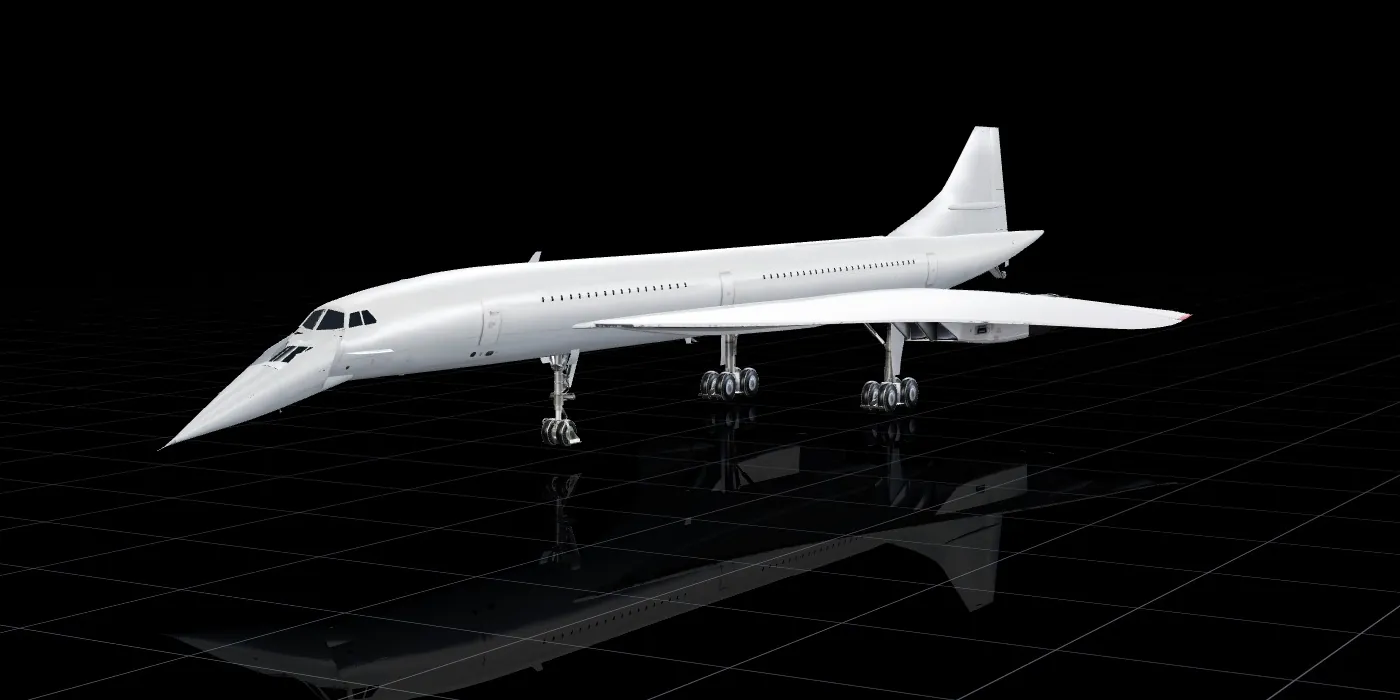
Turn the plane yourself
Every case ends with two QR codes. One opens a 3D model you can turn, so you can look for the clue yourself. The other plays that case’s one-minute answer film. Reading on a screen? Just tap them.
Both open here on planoaviation.com, in your web browser. There is nothing to install.
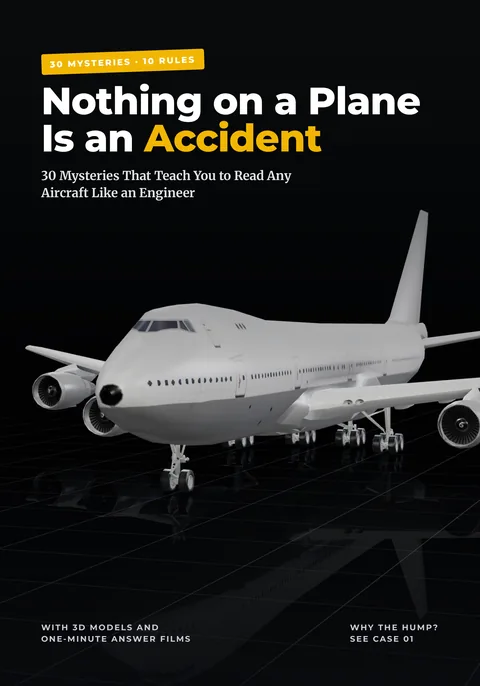
Nothing on a Plane Is an Accident
PDF ebook · 230 pages
$19- All 30 cases, on 230 full-color pages
- A 3D model to turn and a one-minute answer film for every case
- Reads on your phone, tablet and computer, and prints at 7 x 10 inches
- Free updates: if we fix a mistake, the new version is yours too
The book goes on sale here soon. Questions? Write to hello@planoaviation.com.
Payment, tax and the download are handled by Gumroad. If the book did not work for you, you can ask for your money back within 14 days of buying it. How refunds work.
Questions and answers
What exactly do I get?
A PDF ebook: all 30 cases on 230 full-color pages, with the 10 rules, a final exam, an airport mission log and a certificate. Every case ends with two QR codes that open its 3D model and its one-minute answer film on this website.
What can I read it on?
Anything that opens a PDF: a phone, a tablet or a computer. The pages are 7 x 10 inches and made for screens and for printing, so you can also print the pages you want.
How do the 3D models and answer films work?
Scan a case’s QR code with your phone’s camera, or tap it if you’re reading on a screen. The 3D model or the film opens in your web browser, here on planoaviation.com. There is nothing to install. You can try the 3D viewer now.
The people whose 3D models and photos helped us are named on our credits page.
Do I need to know about planes, or be good at science?
No. Every word is explained the first time it’s used, in plain language. If you can read this page, you can read the book.
Who is it written for?
It’s written so a curious 15-year-old understands every word. It’s also for any grown-up who has looked at a plane and wondered why it looks the way it does.
Are the pictures made by AI?
No. No picture in the book was made by AI. The 3D pictures come from our own studio, the diagrams were drawn for the book, and the real photos are free-to-use pictures, most of them from U.S. government archives, each credited where it appears.
Is it made or approved by Boeing, Airbus or an airline?
No. Airline and maker names are used only to say which aircraft is which. This book is not made or approved by any airline, maker or government agency. Its planes are painted plain white, with no airline’s colors or logos.
How do I pay, and how do I get the file?
Through Gumroad, an online shop that sells and delivers the book for us. Gumroad takes the payment, adds any sales tax, and gives you the download. It also emails you a receipt with your link, so you can download the book again later.
Can I get a refund?
If the book did not work for you, you can ask for your money back within 14 days of buying it. Refunds go through Gumroad, back to the way you paid. Read how refunds work.
Can I share the book, or use it with a class?
Your copy is for you: read it on all your own devices and print pages for yourself. Please don’t share the file or post it online. Teachers who want to use it with a class, please write to us first.
I found a mistake, or I have a question
Write to us at hello@planoaviation.com. Every fact in the book was checked against the sources listed in each case. If you find a mistake, tell us and we’ll fix it in the next free update.
Start with Case 01 today.